Prepared by Sovereign+
The contents and design of this presentation are the property of Sovereign+, shared in confidence and intended exclusively for the review of Eastman Music Company. Please do not reproduce, distribute, or share it beyond the intended recipient.
Best experienced on desktop. The motion, layout, and detail are built for a larger screen — a phone won’t do it justice.
By entering, you acknowledge the above.
Most companies are competing to be chosen. Eastman can compete to be essential.
In institutional bids and on the dealer floor alike, the sale is rarely won by the loudest brand. It goes to the brand that was specified into the requirement, recommended by the teacher, and known cold by the person selling it. Those moments decide the purchase — and almost no one in the industry owns them on purpose.
How institutional and dealer sales are actually won
The industry spends its marketing budget on awareness — booths, sponsorships, clinics, advertisements. But neither institutional purchasing nor dealer sales turn on awareness. They turn on four moments, each carrying more weight than the one before it.
- The salesperson reaches for the instrument they know best. On the dealer floor, the horn a salesperson can demonstrate with confidence is the horn the family carries home. Fluency, not preference, closes the counter sale.
- The director recommends the brand they trust. A band or orchestra director vouches for the brand that has never embarrassed them in front of a parent — and that recommendation reaches every family in the program.
- The professor teaches the next generation of directors what to buy. In the university methods room, a single professor sets the purchasing instincts of teachers who will write specifications for the next thirty years.
- The bid is written with criteria a brand can — or cannot — meet. A purchasing requirement quietly admits or excludes a brand before a single instrument is ever compared. Whoever shapes the criteria has already shaped the outcome.
In ascending order of leverage.
Most of the industry competes at the level of preference: be liked, be remembered, be present. The durable sales sit a level above — at the recommendation and the requirement. A brand written into the spec, taught in the methods room, and fluent on the dealer’s lips does not have to win the comparison. It has already won, before the comparison begins.
Preference buys attention. The requirement owns the decision.
What the industry is already doing
The full field of initiatives makers use to win educators, dealers, and bids — why they run them, how educators receive them, and how directly each connects to a sale. Select any to expand.
Tie educator membership to inventory and future purchases, so goodwill converts into committed spend and a place on the bid list.
A supportive community that recognizes their work, with benefits that grow as they engage.
KHS America — the Academic Alliance.
Make the people who recommend and sell the product fluent in it, lowering friction at the point of recommendation.
Professional development and credibility — useful, if sometimes time-consuming.
Yamaha, Roland.
Embed the brand in lesson planning and classroom use, so it becomes the teacher’s default option.
Genuinely helpful, time-saving classroom support.
West Music (Music ConstructED), manufacturer learning libraries.
Reduce the budget and support barriers that slow school purchasing, and keep customers inside the ecosystem.
Practical relief on tight budgets.
Music & Arts, West Music.
Build relationships, trust, and belonging with the people who specify — face time that compounds over years.
A valued professional community and a source of inspiration.
Conn-Selmer — the Institute.
Consultative, hands-on selling environments that support conversion and upsell at the moment of decision.
A confident, low-risk way to choose.
West Music, full-line retailers.
Convert artistic credibility into brand affinity at the classroom level.
A memorable gift to students, and genuinely inspiring.
D’Addario, artist-relations programs.
Borrow the legitimacy of flagship institutions, so the brand becomes the safe default for every tier below.
A signal of seriousness and quality.
Yamaha, university partnerships.
Build reputation, trust, and long-term access by investing in music education itself.
Admirable community investment.
The D’Addario Foundation.
Impact reflects how directly each initiative connects to a purchasing decision — not a measure of its worth. Every one of these has its place.
Eastman already wins the comparison
When a bid is a clean comparison — price against quality against availability — Eastman tends to win. The instruments clear bids on price, outplay the value tier on sound and durability, undercut the premium tier on cost, and ship when others cannot.
Across the pitched instruments of the band, the orchestra, and the guitar ensemble — strings, every woodwind down to the double reeds almost no one still makes, brass, mallet percussion, guitars — few houses match the range, and fewer still the value.
So the question was never how Eastman creates demand — it already holds the product advantage most programs spend years trying to manufacture. The opportunity is to extend that advantage into the moments before the comparison: the recommendation, the methods room, the bid. The same qualities that win the instrument on the table can win the decision around it.
The product already wins. The opportunity is to make winning repeatable — by design.
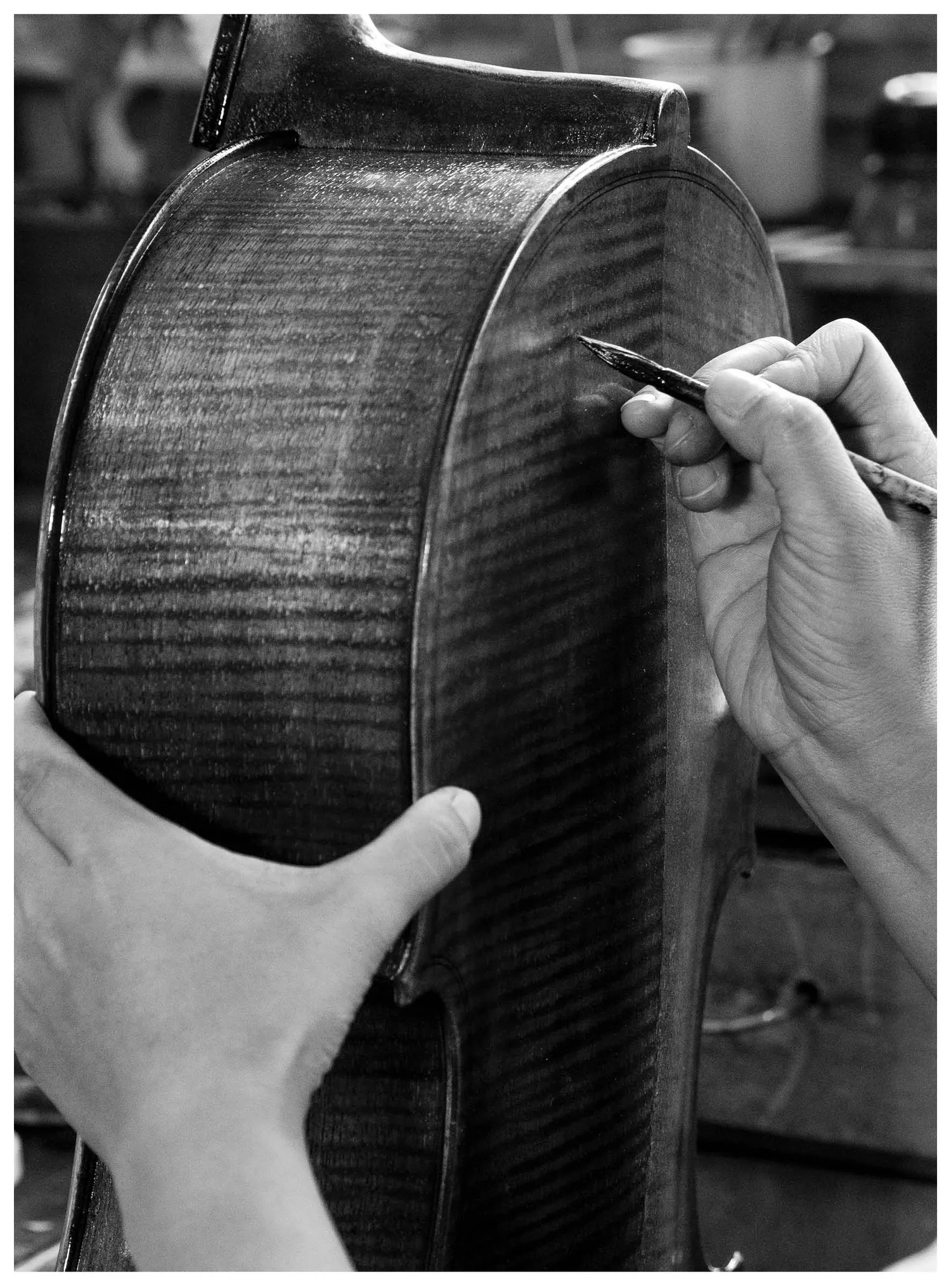
Three ways to become essential
Any major maker could pursue the same directions. Eastman’s advantage is its starting point: it has not yet committed a budget to standing education programs, so it can design one coherent system from the outset — and, unlike almost anyone in the field, build it to return revenue rather than only spend it. Each move below stands on its own. Each is built on something Eastman already owns: the instruments, the range, the craft.
Classroom repair, made the standard
A maintenance-and-repair platform for educators — taught on Eastman instruments — answering the gap every band and orchestra teacher lives with and almost none were trained for.
It places Eastman in the teacher’s hands as the working example. It makes “basic maintenance and repair instruction” a line a director can reasonably write into a bid — a requirement a brand without a platform cannot meet, and one the educator will defend as good practice. And it produces the rarest thing in conference programming: a session people line up for, because they leave able to do something.
And because schools, universities, and high-school CTE programs will pay to adopt it, the platform can offset its own cost — a sales initiative that returns revenue instead of only consuming it.
The payoff: bids defended and won, on the ground Eastman already holds.
Brand preference, set at the source
The same content as methods-class curriculum, paired with a faculty council that brings professors new instruments to test and new repertoire to read.
Brand preference is taught before it is held. The professor who tells twenty years of future directors what to buy is the most valuable recommender in the field — and a direct buyer of the professional horns that carry the margin. Reaching the university reaches preference at its origin and high-tier sales at the same desk.
The payoff: the recommendation set in Eastman’s favor, for a generation of directors.
The dealer floor, made fluent
Sharpen what already exists — the dealer training and its incentive — into product fluency the floor staff absorb in sequence, then keep as reference.
Eastman already had the instinct — it turned its marketing into a genuine learning platform. The opportunity is to point that same instinct at the dealer’s daily work: contemporary, sequenced fluency the staff build and then keep as a reference. As a bonus, it reveals where demand is forming — watch which instruments dealers study, and you see where the next orders are taking shape.
The payoff: the salesperson who knows Eastman best sells Eastman most.
The mechanics are already proven in the market
None of the three is speculative. The strongest names in the field already show that each one moves product — each on its own.
has shown that a manufacturer’s own educational product, written into a school’s bid as a requirement, can shape which brand wins the award. The specification itself becomes a competitive instrument.
Validates — repair as standardRun the same playbook, and give classroom teachers something more useful still — maintenance and repair instruction, not only tone and technique. The same proven mechanism, with a more compelling reason to write it into the bid.
built the Academic Alliance — a branded community of educators whose benefits grow alongside their engagement with the brand, extending all the way to inventory and purchasing. Educators invest in a program that invests in them.
Validates — preference at the sourceMembership built on inventory and purchase commitments naturally favors the largest programs. Eastman can welcome every school instead — leading not with what a school must hold, but with what Eastman gives. The instruments hold up under the pressures of classroom use, and the repair training makes sure of it.
has invested for years in extensive dealer education, because fluency at the point of sale reliably moves product. The category has already proven the idea works.
Validates — the dealer floorThe opportunity is to modernize a proven idea — training that works as a guided path and an on-demand reference at once, interactive and certifiable rather than a queue of long video lessons, designed for the working professionals retail staff actually are.
Each works alone. What no one has done is orchestrate all three into a single system — and build it to earn its keep.
One ecosystem. Every stage of a career.
Apart, three sound ideas. Together, something no competitor is positioned to build — a presence at every stage of a musician’s and an educator’s life, each stage feeding the next.
Every stage feeds the next. The student who learns to repair becomes the technician who builds what the next student will play.
The breadth is the part no single-category maker can copy. It takes the whole pitched room — every instrument, under one roof — to teach the whole room, supply the whole room, and be recommended across it. Eastman is one of the only companies on earth that has it.
Across the field, educational and relationship programs are a selling expense — even artist relations, at its best, is a cost the brand carries. Built as one system, with a curriculum schools and programs will pay to adopt, it can be the rare initiative that returns more than it costs.
How Eastman differentiates — and dominates.
Eastman is one of many companies that make excellent instruments. It could be the only one that owns the system through which instruments are chosen — from the first repair a student learns to the last horn a professor recommends. The product advantage is already in hand. The opportunity is to build the position around it that no rival can.
The architecture is the work. That part is a conversation.
Sovereign+ designs what actually works
A research-led strategy and design practice — and the firm music-industry leaders turn to when insight has to become a system that moves sales.
Eastman has the product. Sovereign+ can architect the position around it — and tie every move to the sales it is meant to create.
Start the conversationSovereign+ · Research-led strategy, diagnosis, and architecture